
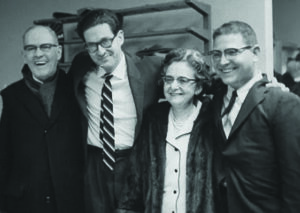
 With the renewal of the Cold War, we are reminded that it is a bad idea to travel to places where the rule of law is meaningless. During the Cold War, 28-year-old Frederic L. Pryor learned that lesson the hard way.
Pryor, a Yale graduate, was doing research for his doctoral thesis on trade in Communist countries, and taking classes in West Berlin. He routinely drove his red Karmann Ghia to East Berlin to interview economists from East Germany. On August 25, 1961, his research completed, he made a last visit to hear the East German President speak and say goodbyes to people he had met, including a friend’s sister.
 The climate of the Cold War had just changed for the worse – just two weeks before, the East German President had signed an order to build a wall to stop defections to the West. When Pryor stopped at the sister’s house, East German authorities were there. She had just fled to
  the West. Perhaps Pryor was there to pick up her belongings? The bright red Karmann Ghia was searched and the thesis found. Pryor was arrested on charges of espionage, punishable by death. He was sent to Hohenschönhausen Prison.
In a 7’ x 11’ cell, Pryor was awakened at 5:00 am each day for the next 5 months, and interrogated by the Stasi, the East German secret police, for 8-10 hours. He had no contact with his family. His cellmate was planted by the Stasi to see if he would confess. He was told he would be put on trial, and thought that he would rather commit suicide.
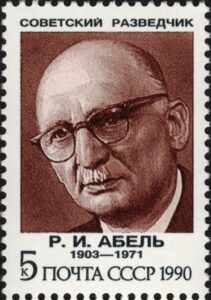
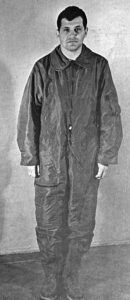 And then on February 10, 1962, he was taken to Checkpoint Charlie, the border crossing between East and West Berlin, and released. He found that he was part of the release of one American spy, Gary Francis Powers, and one Soviet spy, Rudolph Abel. He was an expendable pawn played by the East Germans, and thrown in to the deal.
Interviewed after his flight home, he asked that there not be “a lot of cheap propaganda slamming East Germany,” and “after tomorrow, forget me.” He was awarded his doctorate that year, and spent his career teaching at Swarthmore College. Upon retirement he moved to White Horse Village. He resurfaced in 2015 when his story was re-told in the Spielberg movie, “Bridge of Spies.” He said at the time, “I enjoyed the movie, but the person with my name in the film has nothing to do with me since almost every incident they portrayed was fictional.” Pryor died in 2019 at age 86.
For more information on the Edgmont Historical Society, visit their Facebook page at: https://facebook.com/groups/edgmonthistoricalsociety/