
 Shrink your lawn (even just a little bit at a time), remove invasive plants and replace them with keystone plants. Keystones are native plants crucial to the food web and ecosystem because they support so many other plants, animals and insects throughout their life cycles.
Planting native plants under your existing trees provides soft landings to beneficial insects that spend part of their lifecycle in trees and then drop to the ground. Native plants also provide habitat for these insects which in turn support other animals like birds. Check out homegrownnationalpark.org to learn more about keystone plants and how your garden can make a difference!
Gardening for Pollinators
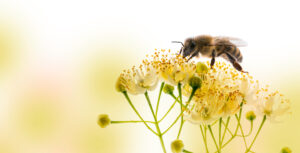
Every garden requires pollinators, and bees are among the finest. Without them, there would be limited flowers and far fewer fruits and vegetables. Did you know that about 30% of the food we eat depends on the pollination of bees? Bring more bees to your garden by planting flowers they like. Keep the bees in your garden by eliminating chemical use, especially while plants are in flower. Be kind to bees in your garden by providing shelter and a place to lay their eggs. Our indigenous, non-stinging, orchard mason bee is 20 times more productive than the non-native honeybee because they are early-season pollinators and active in cooler temperatures.
Know Your Beneficial Bugs!
It’s important to recognize the good guys (you know, the ones that eat bad guys) before you bring out the strong stuff. Traditional pest control needs to be practiced carefully as many chemicals are non-selective and can eliminate both good and bad bugs. As an example, adult and larvae ladybugs are excellent at controlling aphids, mealybugs, whiteflies, scale and other insects. Just about everyone knows what a ladybug looks like, but what about a ladybug larvae? The larval form is 3/8 of an inch in length, black with orange markings and is alligator-shaped.
Right Plant, Right Place
Every plant has a set of conditions that it likes to grow in. These are related to soil type, the amount of light it receives, temperature exposure and the available space it has in which to grow. If you grow a plant in a space that provides its preferred conditions, the plant stands a much better chance of thriving. When checking out a plant at the garden center, look for an attached, product care label. This usually is a guide to the amount of sunlight the plant prefers, how big it will grow and the hardiness zone it will grow in.