
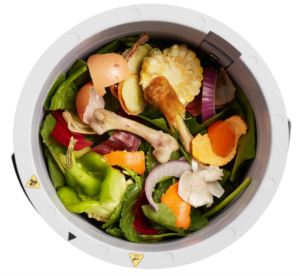
 Tackling kitchen food waste is something many of us are concerned with, even those of us in the waste industry! A few new products have made their way onto the market that we thought would be interesting to research. We aren’t promoting any of these items, we are simply doing a little reporting to assist with your decision-making.
The Mill is most likely the most promoted product that you may have seen online. It grinds and dehydrates food scraps into clean, dry food grounds. You can set its frequency to work every night or less often depending on your waste production. In an everyday setting, it uses about half the electricity it does to run your dishwasher. The grounds can be used in your garden, or you can utilize optional pathways to get those grounds back to farms or gardens.
On the negative side, while The Mill is the size of a traditional trash can, the price point is quite high at approximately $1,000. There are some items that cannot go into it, possibly creating a need for a regular trash can in addition to The Mill. Items like large bones, excessive grease, large amounts of sugar (including baked goods) and compostable plastics cannot be put into The Mill.
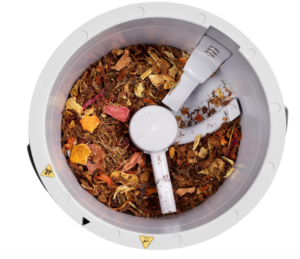 Other alternatives to The Mill are Lomi by Pella, the Vitamix FoodCycler and the Eco5 or Eco3 FoodCycler. All of these options are countertop models, perfect for small households.
The Lomi offers a compact size, efficient time to compost food scraps and the ability to compost bioplastics making it a tough competitor. However, it cannot process bones or hard pits such as peaches and avocados. Its price point of $375 makes it an easier way to test the “home compost waters.”
The Eco FoodCyclers are countertop options that offer two different sizes to match your family. The large 5L capacity is $600, and the smaller 3.5L size is $450. These models handle most food waste, however, they cannot process compostable plastics or larger beef bones.
The least expensive of all of the options is the Vitamix FoodCycler at $220. Like the Eco FoodCyclers, it can process most bones and hard pits but cannot process bio-plastics. Its composting time is also longer than the other two brands, considering its small capacity of 2L.
All these machines claim to be odorless, low sound and high efficiency. We will certainly be keeping an eye out for additional competitors that may reduce the price of this sector of products.