
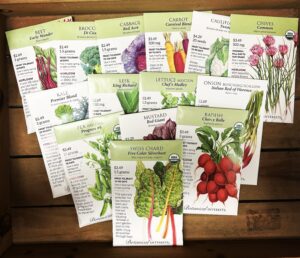
 Why Start Early?
We often need to give plants a head start by germinating and growing seedlings indoors in early spring. Our summers are too short for many crops to complete their flowering and fruiting cycles if started directly in the ground. Favorites like tomatoes, peppers and eggplants all need a long, warm growing period to set and ripen a good crop. When it warms up outdoors we can plant sturdy, well-established seedlings.
When to Sow Seed Indoors
Generally, the time to start your seeds is about six to eight weeks before the last expected frost date, which is around Mother’s Day, and then planting the seedlings outdoors about two weeks after that date. The nighttime temperatures should consistently stay in the 50-55℉ range.
Getting Started
Nurseries carry seed starting kits, heat mats, grow lights, seed starter mixes and fertilizers. You may also choose to use your own recycled containers. Your planting containers should be 2-3 inches deep, with small holes for drainage. You can use plastic yogurt or cottage cheese containers or half-gallon milk cartons. Just make sure your recycled containers are cleaned well before using. After your setup is ready you will need to choose a good quality seed starting mix. The soil should be lightweight, and provide natural moisture retention and drainage, as well as adequate aeration.
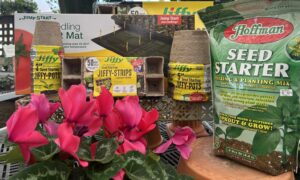 Wet your seed starting mix, so the moisture level is uniform. Fill each container with the mix, leaving enough of a reservoir so that when watering, it won’t spill over the top. Label each variety with a plant label and include the sowing date. Make holes about ¼ inch deep and drop in individual seeds about an inch apart. Cover carefully with the seed starting mix. Remember to water seedlings regularly and carefully.
Planting Seedlings in the Garden
When the weather outdoors has warmed into the 50-55℉ range at night, it’s time to gradually acclimate your seedling to outdoor conditions. Put them outside in a protected spot for a half day at first, then for two to three full days. A spot with morning sun and afternoon shade is ideal. Then gradually move them to full sun. Plan to transplant into the garden in the late afternoon or on a cloudy day to minimize stress. Garden bed preparation is important. Remember to weed the bed well, add a few inches of compost and some dry organic fertilizer and thoroughly work them into the soil.
After transplanting your seedlings, water well and consistently. Make sure your seedlings don’t dry out. They can be mulched with organic materials like straw or mulch. This will provide an even moisture balance needed for healthy plants and will also discourage weeds.