
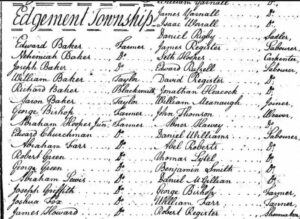
 The Pennsylvania Constitution of 1776 provided for proportional representation among the counties. Counties with more population would be entitled to more representatives than counties with fewer inhabitants. But, then and now, the number of inhabitants is a moving target. Families grow, new people come and others leave. So the Pennsylvania Constitution provided that a census would be taken every seven years, a Septennial Census, and the representation adjusted accordingly.
1793 was a Septennial year, and in Edgmont, farmer William Yarnall agreed to visit each household in the township and collect the necessary information. The 1793 census did not ask a lot of questions: just name and occupation. But a census is a primary source for historians to better understand how the people lived in that time.
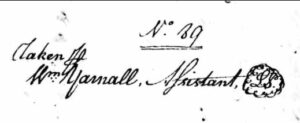 The federal government had just done its first Decennial Census in 1790, so we know that the population of Edgmont at that time was 437 people in 63 households. In 1793, Yarnall found 89 “taxables,” people who paid county and state taxes on real estate that they owned. The 1793 census did not ask about women, children or slaves (there were five in Edgmont in 1790). That information was reported in the federal census, but the sole purpose of the 1793 census was to count the taxpayers in Edgmont, and each other township, to determine how many representatives the county would have in the General Assembly.
 The most interesting feature of that census is the occupations that are listed. It gives a snapshot of what jobs are needed in the farm communities of the late 18th century. Thirteen occupations were included, with two people for whom no occupation was listed. As expected in a farm community, the largest group consisted of 38 farmers and 16 “labourers,” constituting more than half of the taxables. The next largest groups were: five widows, four blacksmiths, four shoemakers, four ”taylors”, three carpenters, three tanners, two masons, two saddlers, one chairmaker (Joseph Register) and one joiner. Five women were on the list as widows, so they inherited the husband’s property and were “taxables.” Though adding to the representation for purposes of voting, women were not entitled to vote. That would not come until 1920.
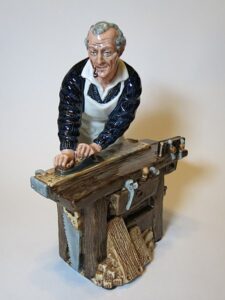
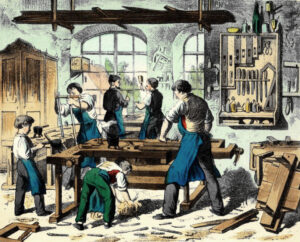 Do you recognize all of those occupations? I admit I had to look up “joiner”: a person who “joins” pieces of wood together in a variety of ways to form some larger product. Do all of those occupations exist today? Yes, people still need these types of goods and services, but other than farmers, labourers and widows, you won’t find many of the others in Edgmont Township in 2025.
For more history on Edgmont Township, Delaware County, and membership information, please
visit our Facebook group at https://facebook.com/groups/edgmonthistoricalsociety/