
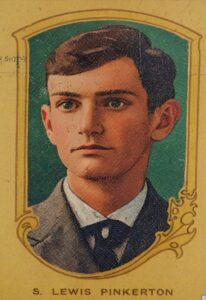
 On November 7, 1913, Samuel Lewis “Lew” Pinkerton, age 26, overseer of Brick House Farm and tax collector for Edgmont Township, disappeared. That morning, he had shot two rabbits for dinner, visited Media for medicine for the cattle, dropped off the rabbits at his Mendenhall boarding house, paid farm hands their wages from a wad of bills he pulled out of his pocket, and delivered the livestock medicine to William Thorpe on a nearby farm. He then chatted with neighbors about his recent election as tax collector before proceeding toward home at dusk, and was never seen alive again.
With no sign of him, neighbors launched a manhunt across nearby woods for weeks. His father later remarked, “The boy did not have a bad habit… I think he has been waylaid and murdered for his money.”
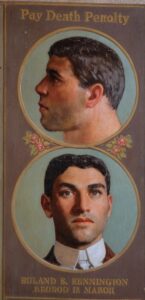 Meanwhile, guilt stirred at Brick House Farm. Two recent hires—George March, 31 and Roland Pennington, 19, lived on the property. On November 7th, March’s common-law wife and her 16-year-old daughter Mildred saw the two farm hands enter the barn at about 5 p.m., followed by screams. March briefly returned home for a lantern, claimed the noises were from “a passerby,” and subsequently both men returned, washing at the water pump, and sat for dinner. The women noticed blood spots on their clothes. After dinner, the men claimed they were running errands in Gradyville, left the farm in a horse-drawn cart, and didn’t return until after midnight.
Later, March confided some details of the murder to his wife, who informed her father—and then the authorities. When confronted, Pennington offered a confession, explaining that March, motivated by jealousy of Pinkerton’s attention to his wife and the prospect of Pinkerton’s money—Pinkerton was carrying a wad of bills—proposed killing him. In a box stall in the barn, Pennington struck the victim with a blackjack; as they struggled, Pinkerton called to March for help, and March, rather than helping, then joined in the attack, kicking him viciously until he stopped moving. Later that night, they buried his body in a shallow grave on the Wilcox Farm in Chester Heights.
 Both men were tried separately for first-degree murder. March’s trial began in March 1914. A legal surprise emerged when March’s first, still-married wife testified to their marriage, eliminating spousal immunity for his common-law wife, who then delivered her damning testimony.
March was convicted on April 3, 1914, and Pennington several months later. Following appeals, they were both executed in the new electric chair at Rockview State Prison on February 21, 1916, a grim first for Pennsylvania, as it was reported that Pennington was the first man of Quaker blood to suffer the death penalty for murder.
For more information on the Edgmont Township Historical Society, visit their Facebook page at: https://facebook.com/groups/edgmonthistoricalsociety/