
When William Penn’s settlers began arriving in Edgmont Township in the 1680s, they found a land that Natives had occupied for thousands of years. The Natives lived seasonably and traveled well-worn paths to their food supply. They had not domesticated the horse, and so their paths were walking paths. The English arrived with horses and oxen pulling carts, in need of wider roads. Penn’s land grants set aside 1/10th of the acreage for roadways. When the settlers arrived and got the lay of the land, they began developing those roads.
The county seat of Chester County was in Chester, and so each township began building its own roads to carry traffic there – to markets and for court and governmental functions. The townships had to cooperate so that their roads aligned. The Edgmont Great Road was first laid out in 1687 – planned as a 60-foot-wide road from Edgmont to the Kings Highway in Chester – connecting with the road bisecting Middletown township. The route through Edgmont ran in part along the existing Minquas Trail – avoiding the hilly lands that are encompassed by today’s Ridley Creek State Park. Early resident John Worrall had petitioned against the original layout of the road – as not being close enough to his property, and so the road was re-routed to accommodate his concerns.
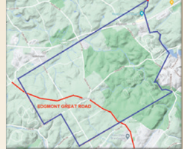 There was no PennDOT to build roads. That task fell on local residents, who arrived with their axes to cut down trees along the planned road, leaving the felled trees to show the way. The Indian trails, tramped down for thousands of years, allowed nothing to grow back; but the new wider English roads needed time before steady traffic achieved the same result, and so each year the local residents had to do more cutting to keep the roadway clear.
Henry Hollingsworth II, an Irish surveyor who helped Thomas Holme lay out the orderly streets of Philadelphia, worked on the Edgmont Great Road. He added a novel touch to the design, planting apple trees as milestones along the road. Proud of his accomplishment, he wrote home that he had planted an orchard nine miles long. Richard Crosby lived along the road but apparently had feuded with the surveyor. Hollingsworth had the last word: instead of planting an apple tree along the road by Crosby’s property, he planted two crossed saplings there, declaring “Richard Crosbie, thou crosses me and I will cross thee.”
For more history on Newtown Square, Delaware County, and membership information, please visit our website at: https://nshistory.org/
