
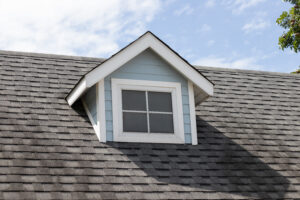
 If you’ve spotted dark stains or long black streaks across your roof, you’re not alone. Many homeowners mistake these marks for dirt, mold or soot, but the real culprit is algae. The most common variety, Gloeocapsa magma—often referred to as blue-green algae—thrives in warm, humid environments. It usually begins as small, barely noticeable spots and, over time, spreads into long streaks as rain carries the algae down the roof’s surface. By the time the discoloration becomes obvious, the algae have likely been growing quietly for several months.
Why Do Shingles Get Algae?
Algae spores are extremely lightweight and travel easily through the air. They can be carried by wind, birds, squirrels or even on your clothing and shoes. Once airborne, these spores settle onto rooftops and multiply quickly, particularly in shaded or north-facing areas that retain moisture longer. Because of their mobility, it’s common for algae to spread rapidly between neighboring homes, townhouses and apartment buildings.
Algae problems have become more common in recent years, and one major reason is the evolution of roofing materials. In the past, asphalt shingles were composed mainly of oil-based asphalt and felt. Today, many manufacturers use a mixture of asphalt and inexpensive fillers such as fiberglass and crushed limestone. While these modern shingles are cost-effective and durable, the crushed limestone happens to be a perfect food source for algae, giving it the nutrients it needs to thrive and spread.
Is It Harmful to My Roof?
Unfortunately, yes. While roof algae won’t eat through shingles immediately, it does feed on the limestone filler, which can weaken the shingles’ integrity over time. As the algae hold moisture against the roof surface, they can accelerate wear, promote granule loss and contribute to premature aging. Left untreated, this buildup can reduce the lifespan of a typical 20-year roof by as much as half—and it certainly doesn’t do your home’s curb appeal any favors.
How Can I Remove It?
Avoid power washing your roof at all costs. High-pressure washing can strip away protective granules, void your warranty and cause long-term damage. The best approach is to contact a professional roofing contractor who specializes in low-pressure, soft-wash cleaning systems designed specifically for asphalt shingles.
In addition to cleaning, consider preventive maintenance. Installing zinc or copper strips near the ridge of your roof can help inhibit algae growth, as rainwater running over the metal creates an environment where algae cannot thrive. Regular inspections and gentle cleanings will not only keep your roof looking new but also protect your investment for years to come.
