
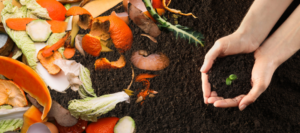
 The average household produces more than 200 pounds of kitchen waste per year. Composting is a great way to nourish your garden as well as keep some of these items out of the landfill. Creating your own compost is easy! Find a spot in your yard to either have a pre-made compost bin or a makeshift pile. It should be close enough to add daily food scraps, but not so close to your home as to be unappealing.
Once a location is selected, you will want to collect yard waste (grass clippings and leaves) as well as food waste. Collect eggshells, coffee grounds, fruit and vegetable peels…pretty much anything that is non-meat, non-dairy and not greasy. Creating the correct ratio of “browns” and “greens” will ensure your compost has proper aeration and nutrition.
Examples of “browns” are leaves, pine needles, shredded paper, dryer lint and straw. Examples of “greens” are kitchen scraps, grass clippings and trimmings from annual or perennial plants. A good start is 3-4 parts browns to 1 part greens. If you see that things are too wet and smelly, add more browns. If your pile is not breaking down or generating enough heat (approx.. 140 degrees is ideal), you will want to add more greens. Add water to your pile if it’s looking too dry. Turn your pile occasionally (once a week) and you will soon have a nutritious product to fertilize your soil.
Compost can be mixed into your soil as you are turning your garden over for planting. It can also be spread on top of the soil and around your plants as a feeding. Compost tea is a product you can make by mixing 1 gallon of compost with 4 gallons of water. Let it steep and feed the resulting liquid to houseplants and vegetables every couple of weeks. Also consider adding compost to enrich your potting soil. This amended soil will help your potted plants thrive.
Give composting a try! It’s good for your plants, good for the environment and keeps down the amount of trash you are adding to landfills.