
 Going into a new spring season with warmer temperatures, is a great time to evaluate your home’s exterior after the long winter. Remember your house is about to face massive temperature swings with wind driven rain storms in the coming months. Here are a few things to look for to make sure your home can withstand the upcoming seasonal weather fluctuations:
- If you have access to attic space, look for water staining on the underside of the roof decking. Pay special attention around any pipe/vent penetrations in the roof, as these areas are the most vulnerable to water/ice/snow infiltration.
- Inspect the roof from the ground, looking for any missing/damaged or misplaced shingles.
- Notice if the edges of the shingles are frayed or cracked. (The average shingle life is +/-20 to 30 years)
- Look for moss growth or staining on the shingles as this can be a sign of water damage.
- Make sure there’s no tree damage from falling limbs or debris laying on the roof or in the gutters.
- Inspect the gutters and downspouts from the ground to make sure they have been draining properly. (Check when it’s raining for best results.)
- Look for gutters/downspouts pulling away from the house due to snow/ice loads.
- Make sure all downspouts are draining away from the house.
- Look for holes in soffits. (During the cold, squirrels/chipmunks/etc. love to dig.)
- Make sure the fascia and rake boards or capping are still in place.
- View around the chimney looking for missing or damaged counter flashing, cracks in the mortar/stucco or massive staining at the top of the chimney.
- Windows and doors sometimes fog up, which is a sign that the seals are broken or worn.
- The trim around doors and windows should be inspected for holes, rot, cracking or nail pops.
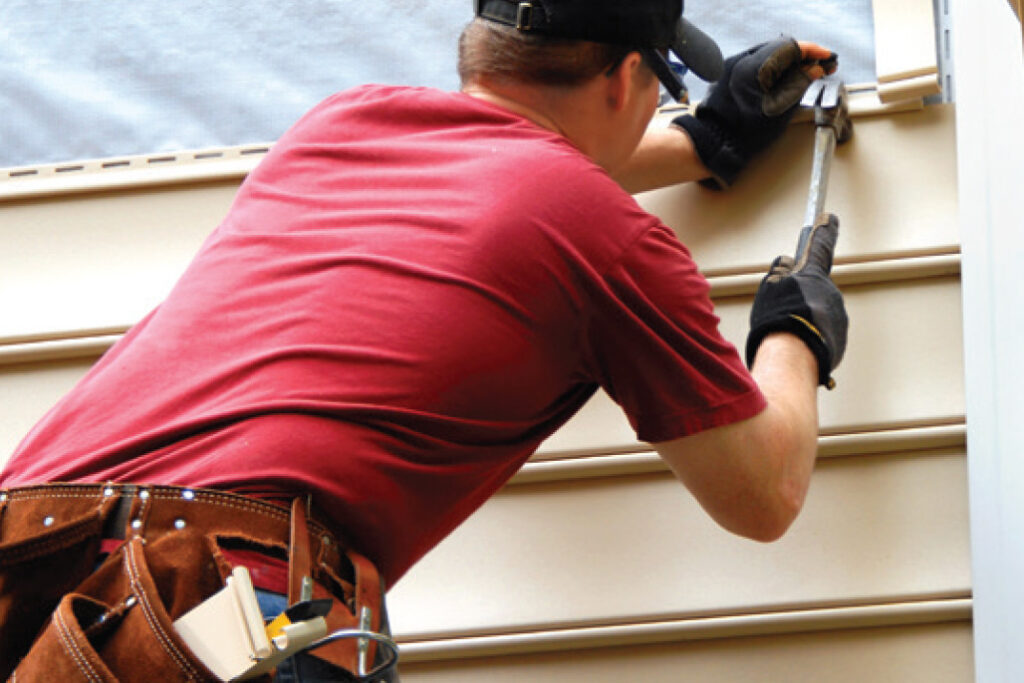
- Inspect your siding, looking for missing/misplaced, cracked or broken pieces.
- Review the stucco or stone facades again looking for cracks, discoloration or damaged sections.
Of course the best way to inspect your roof/siding/chimneys/etc. is up close but we do not recommend homeowners climb ladders to complete these inspections. Please let a professional do the dangerous work, if you see anything that looks out of place.
